
Our materials
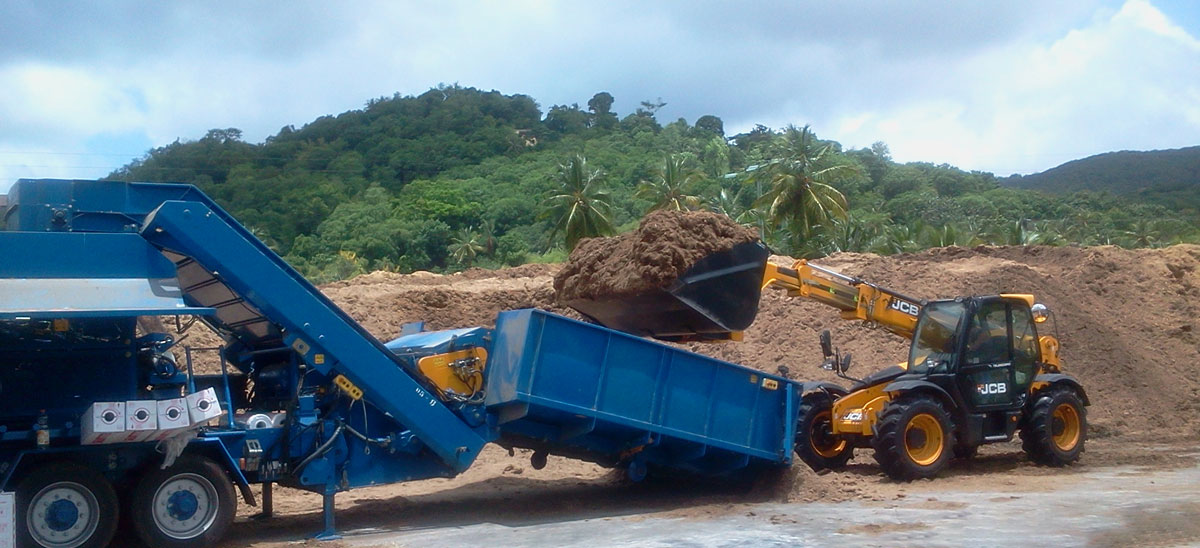
Sugarcane bagasse, the primary raw material of our solutions.
What is bagasse?
Bagasse is the plant fibre left after the juice has been extracted from sugarcane. It is the main raw material used to manufacture EMERFLEX and EMERSPACE panels.
Where does it come from?
Bagasse is the fibrous residue obtained after sugarcane juice is extracted in cane-processing plants. Modernised production lines increase their yield, but they also generate growing volumes of bagasse. Like many agricultural wastes, this resource is still little used, or used in low value-added applications. Storing and handling it is also a constraint and a cost for producers.
EMERWALL recovers this resource from the Martinique sugarcane industry and processes it locally into a higher value-added insulation material.


How EMERWALL sources its bagasse
EMERWALL sources its bagasse from partner distilleries based in Martinique, including JM and La Mauny. As it leaves the production sites, the bagasse is collected and then transported to EMERWALL’s manufacturing unit. This organisation makes it possible to add value to a resource from the sugarcane industry directly on the island, as close as possible to where it is produced.
Supply is organised together with our partners to ensure the availability and regularity of the raw material needed to manufacture our products.
Bagasse production is seasonal: it follows the cane harvest, from January to July. EMERWALL compacts it and stores it in a warehouse so that raw material is available all year round.

Why this recovery matters to producers
Producers now want to make better use of the bagasse they generate. Part of this material is still little used, while collecting and storing it can be a constraint. Selling bagasse for low value-added uses sometimes barely covers the costs of managing it.
EMERWALL offers a new way to add value by turning this resource into higher value-added materials.
Is there enough bagasse?
≈ 60,000 t/year
Total bagasse resource in Martinique
≈ 7,000 t/year
Bagasse currently available as surplus and that EMERWALL can use as a priority
The amount of bagasse available exceeds the volume EMERWALL’s activity requires: the island has a resource that allows its development to be considered.
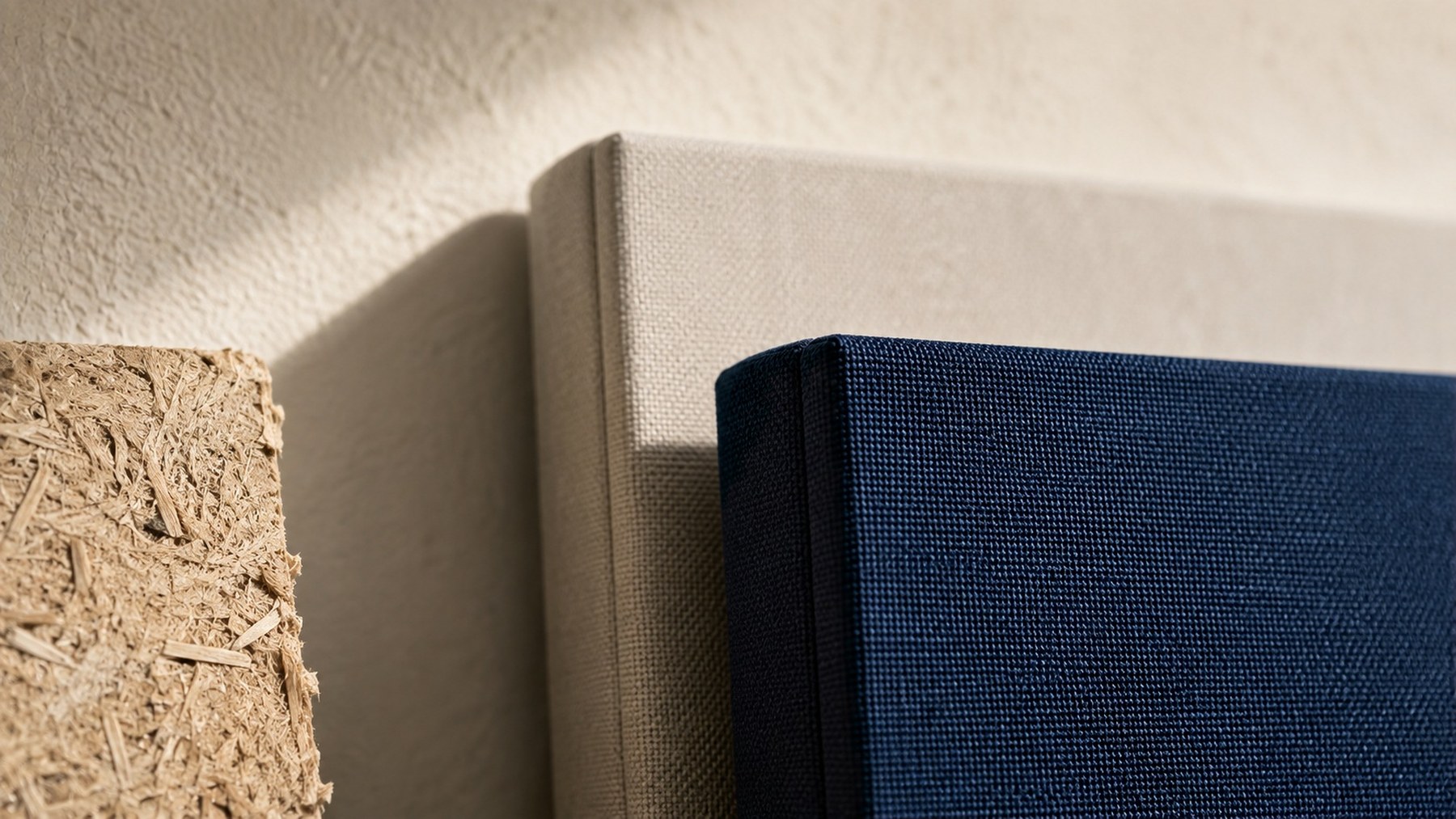
Bagasse
is what is left over.
The fibre that remains once the cane juice has been extracted. In Ducos, it becomes a panel.
How it is processed
Five steps, all carried out at our Ducos unit.
01
Defibration
The bagasse is defibrated to release and prepare the plant fibres needed to manufacture the panel.
02
Drying
The fibres are dried to obtain a material suited to the rest of the process.
03
Mixing
The fibres are mixed with binding fibres that give the material its cohesion.
04
Bonding
The mix is structured and consolidated, without chemical glue, to form the fibrous material.
05
Forming
The material is formed and then cut into panels according to the required characteristics.
Quality, from distillery to finished product
The quality of the bagasse is monitored from the moment it leaves the distillery until it is incorporated into our products. Its collection, transport, storage and processing are part of a control process designed to ensure consistent raw material and production.
01
Leaving the distillery
Raw material inspection
02
Collection
Pick-up and transport to EMERWALL
03
Storage
Controlled storage conditions
04
Processing
Preparation of the fibre before manufacturing
05
Production
Checks during panel manufacturing
06
Finished product
Inspection before delivery
A local supply chain
For producers
A higher value-added outlet for a sugarcane co-product.
Circular economy
An agricultural residue becomes a building and interior fit-out material.
A replicable model
One resource, one workshop, local needs: a model designed for other sugarcane-producing regions.
What comes next?
Bagasse is our first raw material, not our last. We are studying other tropical plant resources, including sargassum, and we are developing EMERTHERM, a pipe insulation made from bagasse fibres.
Discover our solutions
Two applications of the same material: thermal and acoustic insulation, and acoustic comfort in spaces.